


The Brief:
In June 2026, a Clovis, New Mexico resident fatally shot Abel Abeyta after Abeyta drove an SUV into their home late at night. Responding officers found significant structural damage and the driver with multiple gunshot wounds. Abeyta later died at a specialized trauma center from his injuries.
The District Attorney declined to file criminal charges, concluding the shooting was a lawful act of self-defense. Surveillance footage confirmed the vehicular breach, and New Mexico law requires the state to disprove self-defense claims. Prosecutors determined they could not overcome this legal burden at trial.
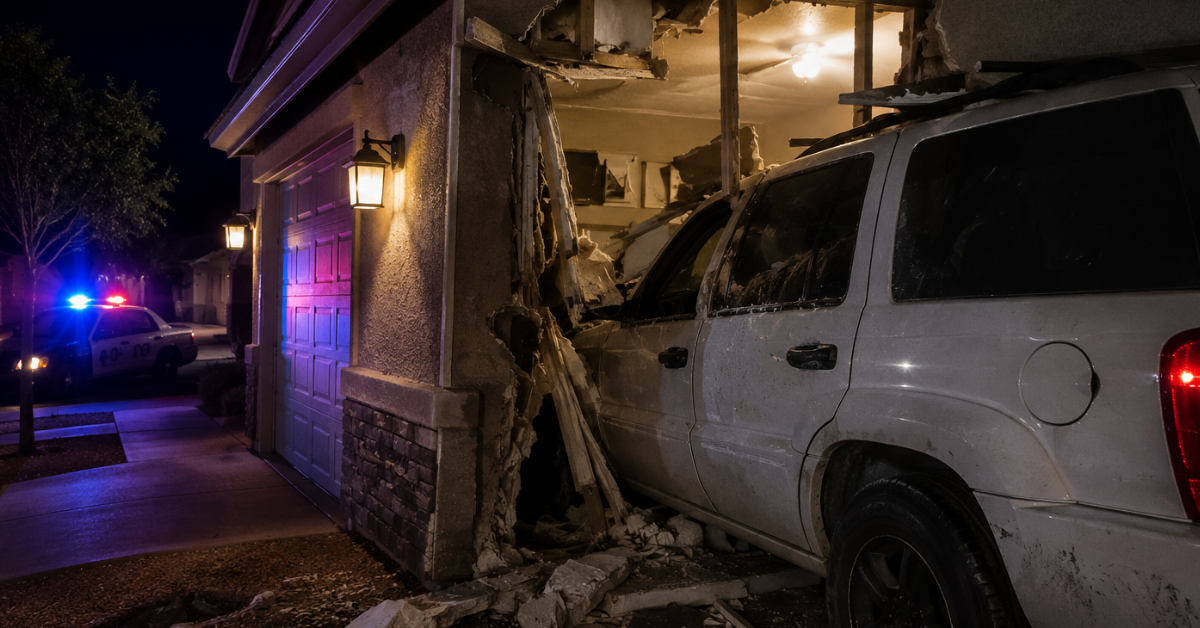
CLOVIS, NM — A late-night vehicular breach into a New Mexico home has concluded with a total administrative clearance for the property occupant. At approximately 11:06 p.m. on Monday, June 29, 2026, Clovis Police Department patrol units rushed to the intersection of 14th and Hull Streets following emergency reports of a major car crash involving a structure, rapidly followed by the sound of gunfire.
First responding officers arrived on the block to find a chaotic scene: a white SUV had hopped the curb and smashed into the residential property, causing structural damage. Inside or immediately adjacent to the compromised threshold, officers located Abel Abeyta suffering from multiple close-quarters ballistic wounds.
Emergency medical teams initiated field trauma care, transferring Abeyta to Plains Regional Medical Center before he was airlifted to a specialized trauma pavilion in Lubbock, Texas, where he later succumbed to his injuries.
The Forensic Dossier and Surveillance Evidence
Homicide and aggravated assault detectives spent weeks mapping the scene, interviewing the shooter, and pulling local digital assets. The linchpin of the inquiry turned out to be localized surveillance video that captured the precise sequence of the crash and the subsequent shooting.
When detectives handed the completed investigative package over to the Ninth Judicial District Attorney’s Office, prosecutors subjected the timeline to the rigorous standards of New Mexico’s use-of-force parameters. On Wednesday, July 15, 2026, the District Attorney notified police chiefs that the state would drop the case entirely.
The prosecution concluded that the available video and physical evidence heavily supported the resident’s timeline of an imminent, terrifying intrusion. Under the law, the case lacked the baseline standard required for criminal prosecution because a jury would find it impossible to convict face-to-face with an un-rebutted self-defense narrative.
The Law: Disproving Self-Defense Beyond a Reasonable Doubt
This resolution highlights a critical procedural mechanism within New Mexico criminal jurisprudence. Unlike states where a defendant must prove they acted reasonably, New Mexico law places the burden of disproof entirely on the state.
Once a resident raises a colorable claim of self-defense or defense of habitation (Castle Doctrine), the prosecution must prove beyond a reasonable doubt that the shooter did not act in self-defense.
Because Abeyta utilized a multi-ton vehicle to smash into an occupied dwelling, the law presumes the occupant faced a severe threat of death or great bodily harm. Since the surveillance footage verified that the resident fired in response to a violent breach, prosecutors recognized they could not overcome that statutory hurdle at trial.
Safety Tip: A vehicular impact into your home is a catastrophic tactical anomaly that completely alters your structural security layout in a single second. The sound can easily simulate an explosive breach or a gas line failure, and the resulting debris field creates an immediate entrenchment hazard. If a vehicle violates your home’s exterior wall, your immediate priority is to create an internal reactionary gap. Do not advance directly toward the smoking wreckage or the driver’s cabin to investigate. Retreat to an interior room with secondary cover, access your defensive platform, and establish a clear line of sight on the breach point while your family loops 911. If the operator attempts to crawl out of the vehicle and advance deeper into your private space while showing aggressive intent, treat the broken wall as a compromised threshold and deploy your defensive tools from a position of cover to neutralize the threat.
Read the full article here