


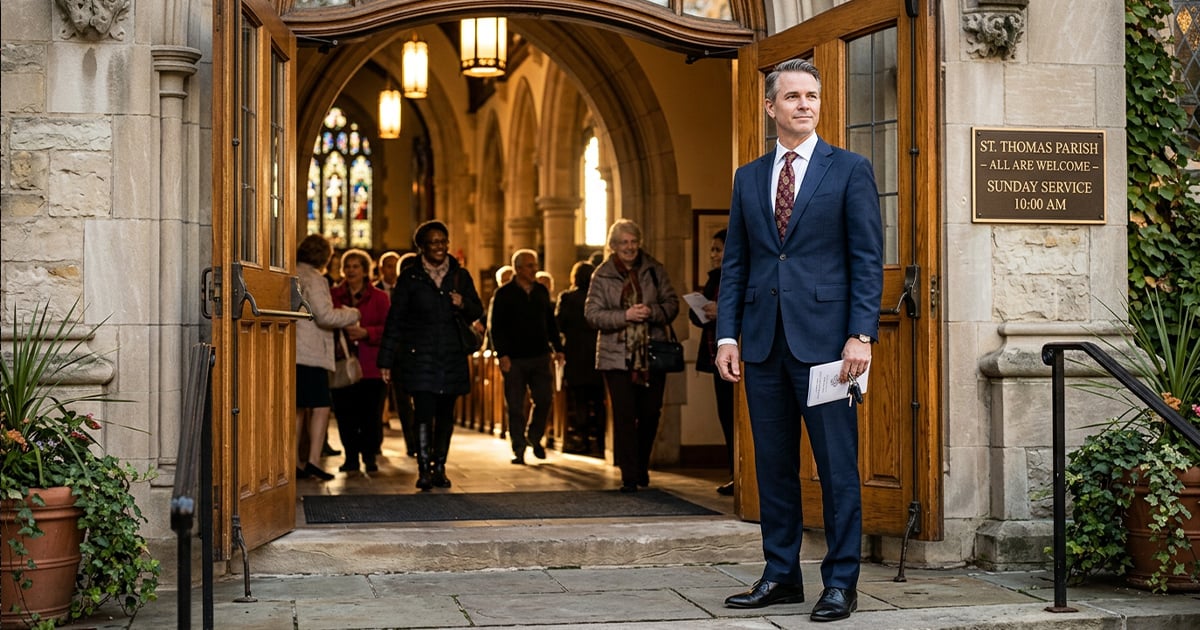
On a quiet Sunday morning, the sanctuary is full. Children shuffle into pews. A greeter smiles at the door. The worship team begins to play.
Now imagine this: a raised voice in the lobby. A door that should have remained closed swings open. A volunteer freezes for half a second too long.
In critical moments, hesitation is not caused by lack of courage it is caused by lack of preparation.
Houses of worship are sacred spaces. But they are also public spaces. And in today’s world, public spaces require intentional, disciplined security planning. The challenge is clear: How do you prepare for crisis without creating fear? How do you train volunteers to respond confidently while preserving the welcoming spirit that defines your congregation?
The answer lies in structured mental rehearsal, scenario-based training, and safe skill development tools such as the SIRT (Shot Indicating Resetting Trigger) training pistol.
Unlike corporate buildings or secured facilities, houses of worship are:
- Open by design
- Staffed primarily by volunteers
- Serving multi-generational congregations
- Often architecturally complex with multiple entrances
Security teams must embody a paradox: visible enough to deter, subtle enough to reassure.
The goal is not intimidation. The goal is preparedness with professionalism.
Mental Scenario Training: Rehearsing Before Reality Arrives
Before any hands-on drills occur, effective teams begin with guided mental scenarios — structured “what-if” exercises that sharpen awareness and decision-making.
Mental rehearsal builds neural pathways. When people have thought through a situation before, they are far less likely to freeze.
Sample Mental Scenarios
- A known disruptive individual returns during service.
- A domestic dispute spills into the lobby.
- A suspicious vehicle circles the parking lot repeatedly.
- A medical emergency occurs mid-sermon.
- A child custody conflict unfolds at check-in.
In each scenario, teams discuss:
- Who observes and reports?
- Who communicates with leadership?
- Where are safe areas?
- What legal or policy considerations apply?
- At what point does intervention occur?
The discussion is deliberate. Calm. Structured.
Because in a real event, calm thinking wins.
Case Study #1: The Frozen Greeter
A mid-sized congregation in the Midwest implemented scenario discussions after recognizing that most volunteers had never thought through a disruptive-person event.
During their first tabletop exercise, leadership introduced a simple scenario: a visibly agitated individual demanding to see a staff member immediately.
Half the team admitted they would “wait and see.” Several assumed someone else would handle it.
Three months later, a nearly identical situation occurred in real life. The difference?
The greeter immediately alerted the team lead. A second volunteer positioned discreetly nearby. The individual was calmly redirected to a private office and de-escalated without incident.
No panic. No raised voices. No congregation awareness.
The outcome wasn’t luck. It was rehearsal.
Moving to Scenario-Based Physical Training
Once mental patterns are established, teams can progress to carefully controlled physical scenario training.
This does not mean chaos or aggressive drills. It means structured role-play under mild stress.
Key components include:
Defined Roles
- Door greeter observer
- Radio communicator
- Team lead
- Children’s ministry liaison
- Medical responder
Clear responsibilities reduce confusion.
Introduced Variables
- Background noise
- Time pressure
- Conflicting information
- Emotional role players
The purpose is adaptability — not adrenaline.
After-Action Review
Every scenario ends with structured debrief:
- What worked?
- Where was communication delayed?
- Did anyone experience tunnel vision?
- Were policies followed?
Learning happens in reflection.
For teams that include legally authorized armed security members, safe and responsible skill refinement is essential.
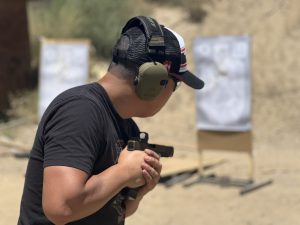
NextLevel Training manufactures the SIRT (Shot Indicating Resetting Trigger) training pistol for a dedicated, inert training device that emits a laser indicator instead of firing live ammunition.
SIRT tools allow teams to:
- Practice safe draw mechanics
- Improve trigger control
- Reinforce muzzle discipline
- Conduct target-focused drills without projectiles
- Train indoors without range logistics
Because the laser visually indicates movement, participants immediately see how trigger press affects sight alignment a powerful diagnostic tool.
Critical Safety Protocols
- No live firearms in training areas
- No live ammunition present
- Clearly designated training zones
- Qualified supervision
- Strict adherence to state and local laws
SIRT tools are not replacements for professional firearms instruction. They are supplements for safe, controlled skill reinforcement.
Case Study #2: Correcting Crossfire Risk
During a scenario-based drill at a large suburban church, two armed team members responded to a simulated threat from opposite sides of the sanctuary.
Using SIRT training pistols, instructors observed that both volunteers unintentionally moved into intersecting lines of fire a dangerous crossfire condition.
Neither participant had recognized the risk in real time.
The visual laser indicators made the problem immediately obvious during replay.
The team restructured movement protocols, emphasizing lateral repositioning and background awareness. Follow-up drills showed significant improvement.
No live rounds were ever involved. The lesson was learned safely.
The Most Important Skill: Judgment
In houses of worship, marksmanship is secondary.
Judgment is primary.
Teams must be trained to distinguish:
- Anxiety from aggression
- Confusion from threat
- Emotion from violence
De-escalation, verbal control, and calm presence resolve most incidents long before force becomes relevant.
Training must reflect that reality.
Security culture should never overshadow ministry culture.
Congregants should feel:
- Welcomed
- Safe
- Unintimidated
- Respected
The most effective teams are those no one notices until they are needed.
Preparedness should quietly support the mission, not compete with it.
Crisis does not schedule itself conveniently.
It does not wait until volunteers feel ready.
It does not pause while someone decides what to do.
Preparation is an act of stewardship.
If your house of worship has a safety team, ask:
- Have we mentally rehearsed realistic scenarios?
- Do our volunteers know their roles?
- Have we stress-tested our communication plan?
- Are we training safely and consistently?
- Are we developing judgment, not just tactics?
Start with a tabletop discussion.
Add structured scenario training.
Incorporate safe tools that reinforce skills responsibly.
The goal is not fear.
The goal is confidence.
Because when the doors open each week, your congregation deserves more than good intentions.
They deserve a team that has already thought through the unthinkable and is prepared to respond with clarity, restraint, and courage.
Safety through Education, Joseph Evangelist
Read the full article here