


The Brief:
Antwoine McCants faces murder charges for a fatal shooting at a Cincinnati restaurant, but the prosecution’s case weakened after a key witness recanted her testimony. The victim’s fiancée admitted the deceased was armed during the confrontation, and surveillance footage showed her removing the weapon from his body.
The video also demonstrated that the victim aggressively pursued McCants, a one-legged amputee who backed away before firing. Under Ohio law, this evidence shifts the burden to prosecutors to disprove self-defense beyond a reasonable doubt, prompting the judge to proceed with trial despite state delay requests.
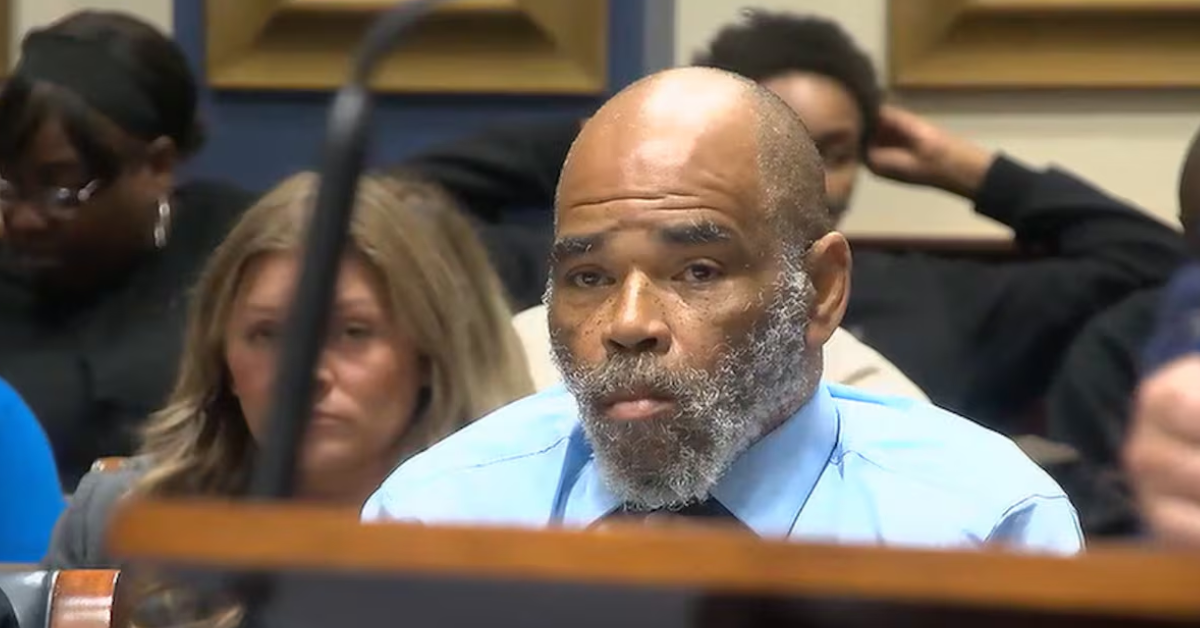
CINCINNATI, OH — A high-profile homicide prosecution that began with allegations of an unprovoked shooting has transformed into an evidentiary crisis for the state. Antwoine McCants, 56, of North Avondale, appeared in court facing two counts of murder and two counts of felonious assault stemming from the June 11, 2025, fatal shooting of Christopher Stallworth inside the Shake Shack across from the University of Cincinnati campus.
Early charging affidavits painted McCants as the clear aggressor, alleging he drew a weapon and fired into Stallworth’s chest while knowing the 41-year-old was unarmed, with his hands in his pockets, and attempting to step back.
On Monday morning, as McCants stood before Hamilton County Common Pleas Court Judge Christopher McDowell to weigh a potential plea offer, the factual foundation of the prosecution collapsed.
The Mid-Trial Confession & The Surveillance Tape
During a court recess, Stallworth’s fiancée, Atiyah Muhammedel—who had previously sworn to homicide detectives that she was the sole owner and carrier of the blue firearm discovered on the patio—asked to speak privately with investigators.
She admitted to detectives that her original statements were false: Stallworth had the loaded handgun concealed in his own front pocket while confronting McCants inside the restaurant.
Detectives quickly notified prosecutors, who turned over the disclosure to McCants’ defense attorneys, Brandon Moermond and Lindsay Arway, as mandatory Brady exculpatory material.
Armed with the admission, the defense filed an emergency motion detailing what the restaurant’s high-definition cameras recorded:
- The Stalking Behavior: Following an external parking dispute, Stallworth and Muhammedel followed McCants into the restaurant. Stallworth sat within earshot of McCants, dialed his phone, and actively directed other individuals to come to the Shake Shack.
- The Aggressive Advance: When McCants got up to leave, Stallworth stood up and pursued him. McCants backed away, but Stallworth kept closing the distance, thrusting his right hand directly into his front right pocket.
- Severe Mobility Disparity: McCants’ family and defense attorneys emphasized that McCants is an amputee with only one leg. He possessed neither the physical capability to outrun Stallworth nor the ability to quickly break contact once pursued.
- Altering the Body: Immediately after shots were fired and Stallworth fell, Muhammedel was captured grabbing Stallworth by the legs, pulling him off a patio ledge onto his face, and reaching directly into his front right pocket to retrieve the concealed weapon before tossing it onto the patio floor.
The defense argued Muhammedel tampered with the dying man’s body to shield him from a massive legal penalty: Stallworth was on active state parole for an aggravated robbery conviction with an attached firearm specification—a sentence that originally carried 17 years in prison. Being found with a firearm would have triggered an automatic revocation and return to state prison.
“Justice Delayed Is Justice Denied”
Faced with the recantation and the video breakdown, prosecutors petitioned Judge McDowell to delay the trial, which would have postponed proceedings into early 2027 due to court backlogs.
Judge McDowell denied the state’s request, declaring in open court: “Justice delayed is justice denied.”
The judge ruled that opening statements will proceed immediately, granting defense counsel permission to cross-examine Muhammedel regarding whether she knew Stallworth was on parole, knew he was legally prohibited from possessing a firearm, and whether that knowledge motivated her to remove the gun from his pocket as he lay dying.
Prominent Cincinnati defense attorney Jay Clark, who famously helped secure the complete exoneration of death-row inmate Elwood Jones, called the revelation an absolute catastrophe for the prosecution and “pure gold” for the defense.
“You have a video that shows what happened. You have a witness telling you what happened and they don’t match. Why?” Clark noted to local media. “If you lie to the police, that reflects on your character for truthfulness… The only thing worse than finding this out the morning of trial is finding out when the witness is on the stand.”
The Law: Ohio’s Stand Your Ground & Burden of Proof Shift
Under Ohio Revised Code § 2901.05, the procedural dynamics of self-defense heavily favor an accused defender once a threshold of credible evidence is introduced.
| Element | Ohio Self-Defense Standard | Application to the McCants Case |
| Fault in Creation | Defender must not have provoked or escalated the encounter. | Video shows McCants retreating while Stallworth pursued him inside the restaurant. |
| Reasonable Fear | Honest, reasonable belief of imminent death or serious harm. | Stallworth advanced while thrusting his hand into a pocket containing a loaded handgun. |
| Duty to Retreat | Abolished in Ohio (Stand Your Ground, April 2021). | McCants had no legal duty to retreat; his physical condition (one leg) made retreat impossible anyway. |
| Burden of Proof | Shifts completely to the Prosecution. | The State must disprove self-defense beyond a reasonable doubt. |
Before 2019, Ohio was the only state in the nation where a defendant had to prove they acted in self-defense by a preponderance of the evidence. Under current Ohio law, the defense only carries the initial burden of presenting minimal evidence that tends to support self-defense.
Once that evidentiary spark is produced—amply met here by the restaurant surveillance video and the recovered blue handgun—the burden shifts entirely to the state. The prosecution must prove beyond a reasonable doubt that McCants was either at fault, did not possess a reasonable fear of death, or engaged in unlawful force.
With their primary witness caught lying to homicide detectives and captured on camera tampering with the victim’s pocket to extract a firearm, overcoming that standard before a jury presents an almost insurmountable legal challenge.
Safety & Tactical Tip: Disparity of force is not limited to physical size or the presence of a weapon; mobility impairments directly influence the legal assessment of an imminent threat. If you suffer from limited physical mobility, your reactionary gap evaporates far faster than that of an able-bodied person. You cannot simply turn and run to break contact. In tight public environments like dining areas, maintaining environmental awareness—such as tracking aggressive individuals trailing you inside from parking lots—is critical. If an aggressor follows you while moving a hand into a pocket or waistband, verbalize clear commands to stop while establishing cover behind solid fixtures like heavy tables or interior walls.
Read the full article here