


Key Takeaways
- The Firearms Policy Coalition challenges Maryland’s public carry restrictions in the Supreme Court case Novotny v. Moore, citing the aftermath of the Bruen decision.
- Maryland’s new Gun Safety Act aims to limit carry locations instead of issuing permits, creating numerous restricted areas.
- The Fourth Circuit upheld most location bans, raising concerns about the interpretation of the right to carry, especially in ‘crowded’ places.
- Historically, the petition argues that permitting people to carry firearms was common and not restricted to secured areas, contrary to Maryland’s approach.
- This case could shape national carry rights, as it addresses conflicts in how ‘sensitive place’ laws are applied following Bruen.
Estimated reading time: 5 minutes
WASHINGTON, DC — The Firearms Policy Coalition took Maryland to the Supreme Court, and the petition lays out exactly how far a state will go to keep people from carrying after Bruen.
On May 20, 2026, FPC filed a petition for writ of certiorari in Novotny v. Moore, asking the justices to strike down a long list of Maryland’s public carry bans. FPC is joined by three of its members, Maryland Shall Issue, and the Second Amendment Foundation. The petitioners are represented by David H. Thompson, Peter A. Patterson, and William V. Bergstrom of Cooper & Kirk, along with Mark W. Pennak.
Here is the backdrop. When the Supreme Court decided Bruen in 2022, it forced Maryland to start issuing carry permits instead of denying them on a “good and substantial reason” standard. Maryland’s response was the Gun Safety Act of 2023, Senate Bill 1. Rather than control who gets a permit, the state went after where you can actually go with one.
The petition is blunt about the strategy, and Maryland more or less admitted it below. As long as the state could keep permits scarce, there was little need for broad location bans. Once Bruen made permits easier to get, that changed. Same goal, new method.
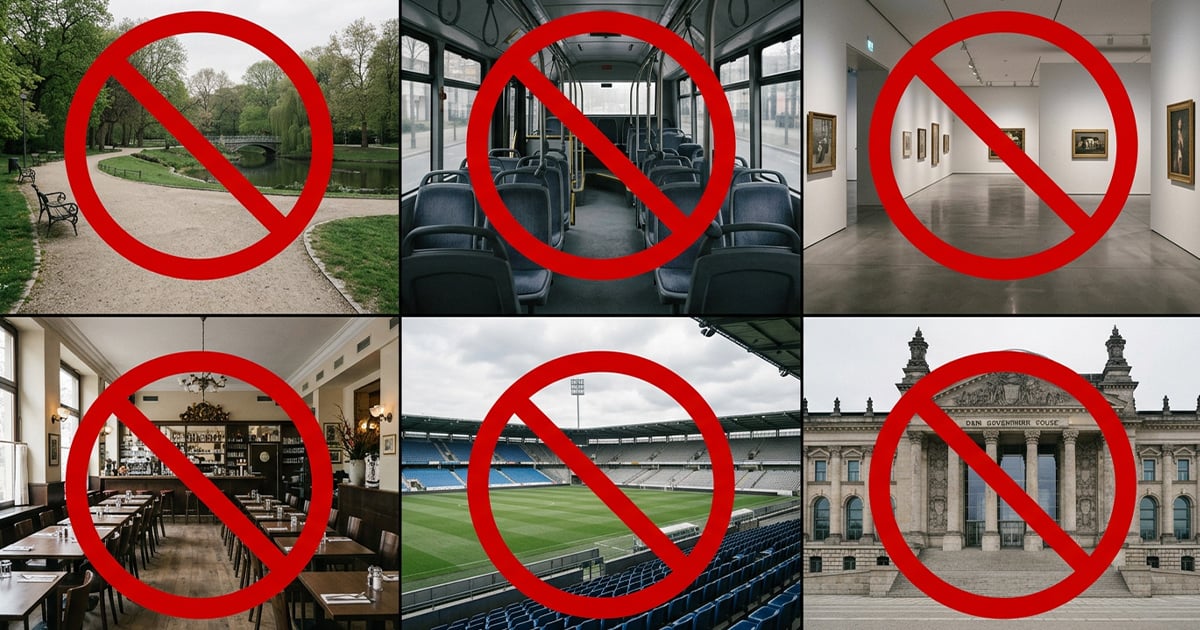
So look at where a permitted Marylander still cannot carry. The challenged bans cover mass transit and transit facilities, public demonstrations and anywhere within 1,000 feet of one, state parks and state forests, four kinds of healthcare facilities, “places of amusement” like museums, stadiums, racetracks, amusement parks, and casinos, anywhere that sells alcohol for on-site consumption, government buildings, and school grounds. On top of that, Maryland flipped the default on private property open to the public, presuming carry is banned unless the owner says otherwise.
Add it up and the question the petition raises is simple. If the right to carry “in public” does not include government-owned land, places where people eat and drink, or where they gather for recreation, then what is left of the right at all?
The case ran through the courts in 2023 and 2024. The district court blocked a few pieces, including the private property default rule and the bans on carry at places serving alcohol and at demonstrations. Then in January 2026 the Fourth Circuit went the other way. It upheld nearly every location ban Maryland enacted, striking down only the private property “vampire rule.” That mixed result is what FPC is now asking the Supreme Court to fix.
What stands out in the petition is how the lower courts got there. To uphold each ban, the Fourth Circuit leaned on a grab bag of justifications: places owned by the government, places frequented by children, places that serve an educational purpose, places of “social gathering,” and above all, “crowded” places. The petition points out that the crowding rationale is exactly what the Supreme Court rejected in Bruen, which warned that letting a state ban guns wherever a crowd might form would gut the right to carry entirely.
More from USA Carry:
That concern was not FPC’s alone. Judge Agee, sitting on the Fourth Circuit panel, agreed with the majority on some points but split off on the parks, forests, transit, demonstrations, amusement, and alcohol bans. He wrote that the majority grossly misread Bruen by pinning its analysis on a smattering of mid-to-late 1800s laws instead of the understanding of the right at the Founding in 1791. On the half-million-plus acres of Maryland state forest where the state still allows regulated hunting, Agee called the idea that the Founders would treat that wilderness as a gun-free “sensitive place” what it is, which is hard to take seriously.
The petition argues the right history points the other way. From the colonial era through the Founding, there was a tradition of permitting and sometimes requiring people to carry firearms in crowded places of public assembly, including a 1770 Georgia law that required men to carry guns to places of public worship. The narrow historical exception was for genuinely secured places, the kind with armed guards and magnetometers, like a courthouse. Not for everywhere a person might want to grab a meal or walk through a park.
FPC President Brandon Combs framed the stakes plainly:
“When the Supreme Court held that states must issue carry licenses, Maryland simply banned carry everywhere people actually go instead. Same result, different method,” he said. “That’s not following the law, that’s open defiance of the Supreme Court, and we’re going to make them answer for it. We will end these carry bans in Maryland and throughout the United States.”
This one matters well beyond Maryland. The courts of appeals are split on how to handle these post-Bruen “sensitive place” laws, and a ruling here would set the rule for the whole country. Maryland filed its own petition in April defending its position, so both sides are now at the Supreme Court’s door.
The government’s response is due about a month after the petition is docketed. I will keep tracking this one as it moves, because how the justices handle it will shape carry rights far past state lines.
Read the full article here