


Key Takeaways
- California’s ban on magazines over 10 rounds has faced legal challenges, highlighted by two conflicting federal appeals court decisions.
- The Ninth Circuit upheld the ban, arguing that large-capacity magazines are not covered by the Second Amendment, while the Third Circuit ruled against similar restrictions in New Jersey by asserting that magazines are indeed ‘arms.’
- The case Duncan v. Bonta has emerged as a significant point of contention in these rulings, potentially heading to the Supreme Court.
- Both circuits disagree fundamentally on whether the magazine’s capacity impacts its classification under the Second Amendment, raising important constitutional questions.
- As of now, the Supreme Court has not decided whether to hear Duncan v. Bonta, and California’s restriction remains valid during this period.
Estimated reading time: 8 minutes
WASHINGTON, DC — On August 3, 2026, the lawyers challenging California’s ban on magazines that hold more than 10 rounds filed a short brief at the U.S. Supreme Court with one message for the justices: another federal appeals court has now struck down an identical limit, and it refused in writing to follow the Ninth Circuit decision that went against them.
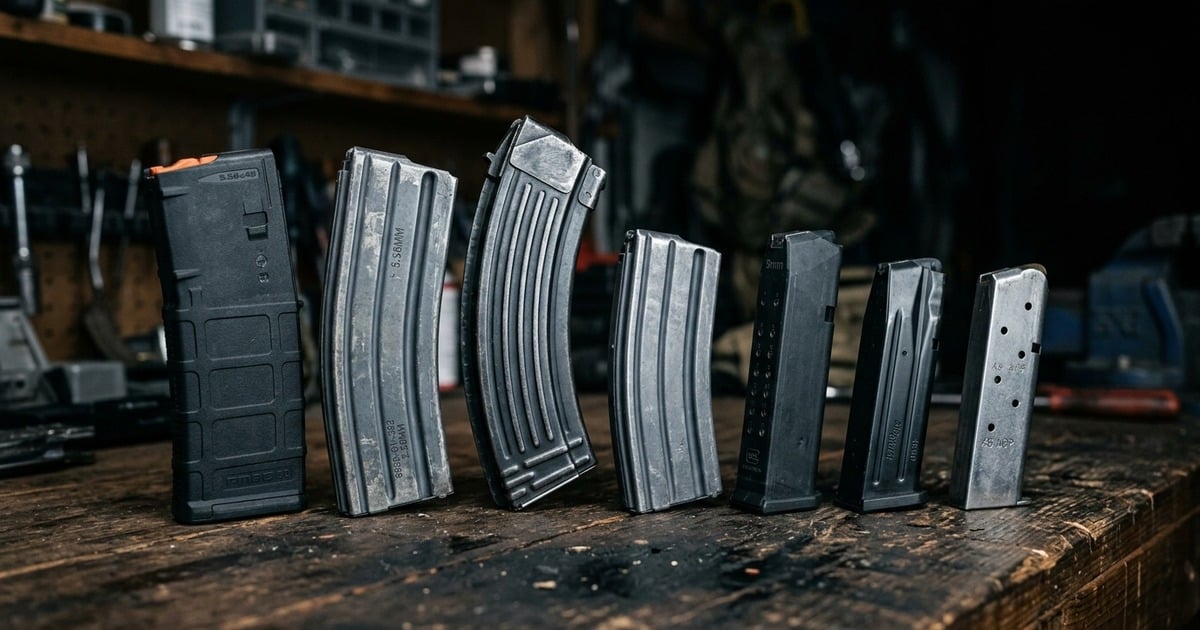
The case is Duncan v. Bonta, No. 25-198, brought by Virginia Duncan, Richard Lewis, Patrick Lovette, David Marguglio, Christopher Waddell and the California Rifle & Pistol Association against California Attorney General Rob Bonta. California Penal Code § 32310 makes it a crime to possess what § 16740 defines as a large-capacity magazine, meaning any feeding device that can accept more than 10 rounds. Violation carries a fine and up to a year in jail. Residents who already owned those magazines when the ban took effect had four choices: remove them from the state, sell them to a licensed dealer, turn them in for destruction, or permanently alter them to hold 10 rounds or fewer.
Three pieces of legal vocabulary carry this story, so here they are in plain English. A supplemental brief is a short filing that tells the Court about something that happened after the main papers were submitted. En banc means the case was reheard by an expanded set of judges on the appeals court instead of the usual panel of three. A circuit split is what you get when two federal appeals courts answer the same constitutional question in opposite directions, and it is one of the strongest reasons the Supreme Court agrees to hear a case at all.
Start with what the Ninth Circuit did. Sitting en banc in Duncan v. Bonta, No. 23-55805, that court upheld California’s ban on March 20, 2025 and gave two independent reasons. The first was that the magazines are not covered by the Second Amendment at all. Writing for the majority, Judge Susan Graber concluded that “[l]arge-capacity magazines are optional accessories to firearms, and firearms operate as intended without a large-capacity magazine. A large-capacity magazine is thus an accessory or accoutrement, not an ‘Arm’ in itself.” The second reason was that even if the text did reach them, the ban falls “neatly within the Nation’s traditions of protecting innocent persons by prohibiting especially dangerous uses of weapons and by regulating components necessary to the firing of a firearm,” a tradition the court built from founding-era gunpowder-storage rules, trap-gun bans and 19th century restrictions on Bowie knives, slungshots and concealable pistols.
That ruling drew sharp dissents. Judge Patrick Bumatay, joined by Judges Sandra Ikuta, Ryan Nelson and Lawrence VanDyke, wrote that the magazines California bans “are the most common magazines in the country,” that by conservative estimates “more than a hundred million” of them exist, and that they “should be more accurately termed ‘standard-capacity magazines.’”
Then came July 17, 2026. The Third Circuit, sitting en banc in Association of New Jersey Rifle & Pistol Clubs, Inc. v. Attorney General New Jersey, Nos. 24-2415, 24-2450 and 24-2506, reversed a district court and held that New Jersey’s restriction on magazines over 10 rounds violates the Second Amendment. The court divided badly, with four judges in dissent and several more writing separately, but the opinion of the court by Judge Freeman went directly at the reasoning California had won on in the Ninth Circuit.
The Third Circuit held that magazines are arms, capacity included. “The text of the Second Amendment covers all magazines, not just magazines that New Jersey considers ‘standard capacity,’” the court wrote, and “it cannot be that a magazine that can hold ten rounds is an ‘Arm[]’ covered by the plain text of the Second Amendment but a magazine that can hold eleven rounds is not.” It then addressed the Ninth Circuit’s theory by name: “The State urges us to adopt the Ninth Circuit’s view that LCMs are not arms but accessories of weaponry, referred to as ‘accoutrements’ in the Founding era.” Its answer was blunt. “There are a few problems with this reasoning.”
On history, the two courts landed just as far apart. The Third Circuit found the magazines to be in common use for lawful purposes, pointing to roughly 24 million AR-15s and similar sport rifles in circulation, over 100 million 30-round AR-15 magazines, and adopting a line from the D.C. Circuit: “There may well be some capacity above which magazines are not in common use but, if so, the record is devoid of evidence as to what that capacity is; in any event, that capacity surely is not ten.” And it threw out the gunpowder analogy the Ninth Circuit had relied on, noting in a footnote that named Duncan directly that “gunpowder-storage laws are not ‘relevantly similar’ to the LCM Provisions simply because both restrict quantities of ammunition,” because those laws were fire-safety measures rather than responses to firearm violence.
Nobody on either court is pretending this is a small disagreement. Judge Shwartz, dissenting in New Jersey along with Judges Krause, Restrepo and Smith, wrote plainly that with the majority’s ruling “our Court is now an outlier.”
That is the state of play the August 3 brief put in front of the justices, and the timing matters. On June 30, 2026 the Supreme Court granted review in Viramontes v. Cook County and Grant v. Higgins, consolidating them on the question of “[w]hether the Second and Fourteenth Amendments guarantee the right to possess AR-15 platform and similar semiautomatic rifles.” Magazines are not that question. The Third Circuit said so itself, explaining that its decision “resolves a question the Supreme Court has not committed to addressing: the constitutionality of a law restricting possession of magazines that can hold more than 10 rounds of ammunition.” If the justices want to settle the magazine issue, Duncan is the case in front of them.
What stands out to me is how deep the disagreement runs. These two courts did not merely weigh the same history and come out differently. They disagree about whether the object in question is an arm in the first place. One court says the magazine in your rifle is an accessory the government may prohibit outright. The other says capacity has nothing to do with whether the Second Amendment covers it, and that treating the tenth round as protected and the eleventh as unprotected makes no sense. Those two positions cannot both be the law of a single country. The Third Circuit quoted the Supreme Court’s own recent language in Wolford v. Lopez on exactly that point, that “the Second Amendment has the same meaning in all parts of the United States” and that “local attitudes can neither shrink nor inflate” it.
The practical stakes are as ordinary as the hardware. Second Amendment Foundation founder and Executive Vice President Alan M. Gottlieb, whose organization filed an amicus brief on September 12, 2025 urging the Court to take the case, described what is at issue as “standard-capacity magazines for handguns and rifles.” An amicus brief is a filing from an organization that is not a party but wants the Court to consider a particular argument. SAF’s Director of Legal Research and Education, Kostas Moros, said in that release that the Ninth Circuit ruling “defies the Supreme Court’s precedents in Heller, Bruen, and Rahimi by wrongly concluding that magazines that hold more than 10 rounds are not ‘arms’ under the Second Amendment’s plain text.” Gottlieb’s phrase describes what ships in the box with a large share of the defensive firearms sold in this country. A serious carry mindset is built on training with the gun you actually own, and in California the state has decided which version of that gun its residents are permitted to own. Anyone carrying there already works through California’s concealed carry permit system long before reaching any question about what can legally go in the magazine.
More from USA Carry:
Where this stands is narrow and worth stating plainly. A cert petition is a request, not a result. The Supreme Court has not said whether it will hear Duncan v. Bonta, California’s magazine restriction remains in force while the petition is pending, and both appeals court rulings came from divided courts with substantial dissents.
I will continue tracking Duncan v. Bonta as the Supreme Court decides whether to take it up.
Read the full article here